Non-VoIP vs VoIP Numbers — Why It Matters for Nigerian Users
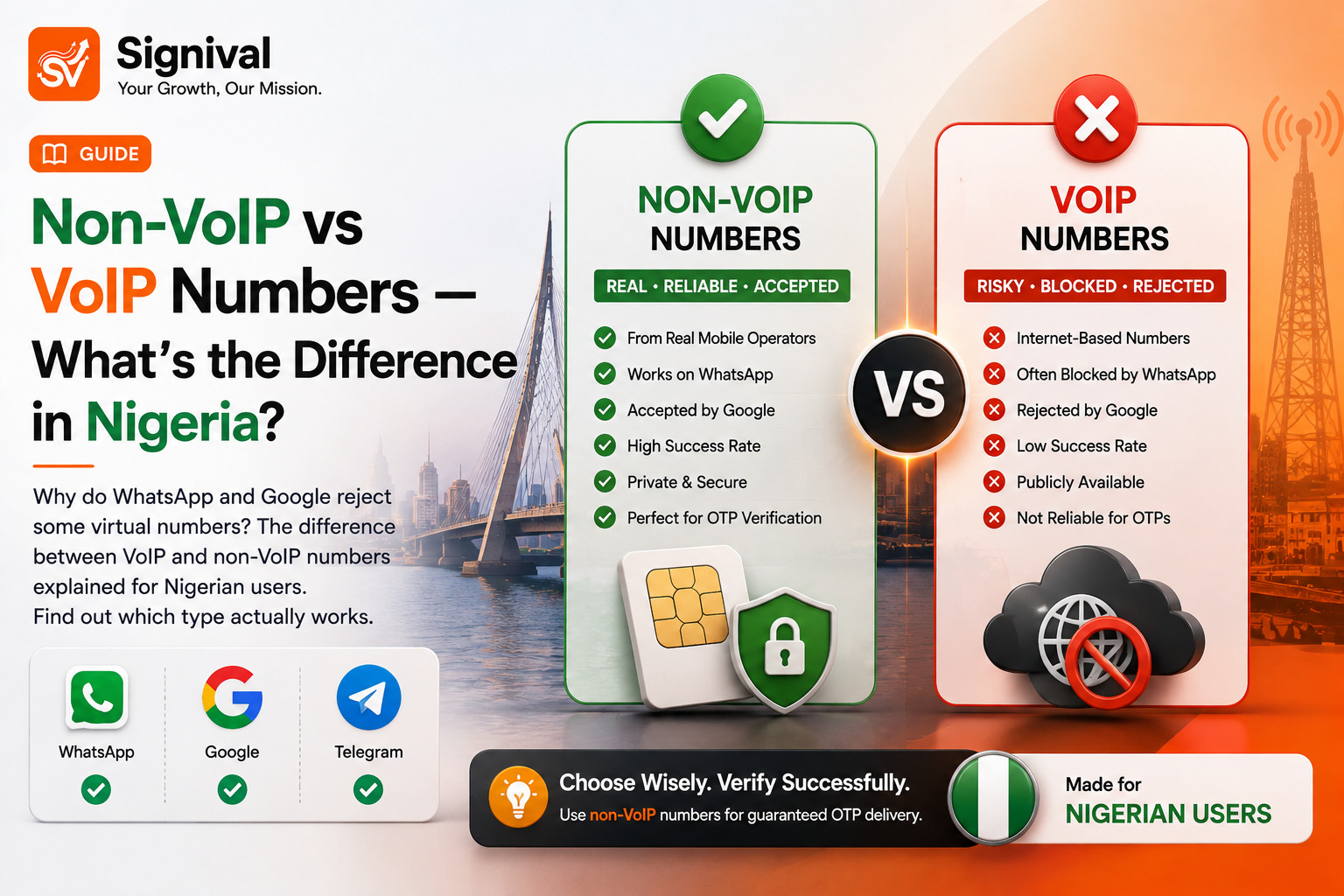
If you've ever tried a free temporary phone number and seen the error "This phone number cannot be used for verification" — now you understand why. The answer is almost always the same: the number was a VoIP number. This guide explains the difference between VoIP and non-VoIP numbers, why it matters for Nigerian users, and how to make sure you're using the right type.
What is a VoIP Number?
VoIP stands for Voice over Internet Protocol. A VoIP number is a phone number that exists on the internet rather than on a physical SIM card. Instead of being assigned by a mobile network operator like MTN, Airtel, or Glo, it is generated by a software service and operates over an internet connection.
VoIP numbers are provided by services like Google Voice, TextNow, Skype numbers, Grasshopper, and most free temporary number websites.
They are cheap to create — sometimes free — because they require no physical infrastructure. A single server can generate thousands of VoIP numbers instantly.
What is a Non-VoIP Number?
A non-VoIP number is a real phone number assigned by a physical mobile network operator. In Nigeria, examples include numbers assigned by MTN, Airtel, Glo, and 9mobile. Internationally, examples include numbers from AT&T, Vodafone, O2, or any national mobile operator.
Non-VoIP numbers exist on real SIM cards (or on eSIMs) and operate through physical network infrastructure. They cannot be generated in bulk by software — each one requires a real operator relationship.
Why WhatsApp and Google Block VoIP Numbers
WhatsApp, Google, Telegram, Instagram, and most major platforms block VoIP numbers because they are overwhelmingly used for spam, account farming, and fraud. Bots can create thousands of accounts using VoIP numbers within minutes. To combat this, these platforms maintain databases of known VoIP number ranges and block verification attempts from them.
This is why:
- Free temporary number websites fail on WhatsApp
- Google says "This phone number cannot be used for verification"
- Instagram rejects numbers from certain services
- Telegram occasionally prompts for additional verification with VoIP numbers
How Platforms Detect VoIP Numbers
Platforms use several technical methods to identify VoIP numbers:
- Number range lookup — phone number prefixes (area codes and operator codes) are publicly registered with telecommunications authorities. VoIP providers use specific number ranges that are identifiable.
- Carrier metadata checking — when you submit a phone number, platforms can check with telecom databases to see which carrier owns the number and whether that carrier is a VoIP provider or a physical mobile operator.
- Reputation databases — numbers that have been used for mass account creation or spam are added to blacklists that platforms share and update regularly.
Signival's Non-VoIP Numbers
Signival's virtual numbers are sourced from real physical mobile operators in their respective countries. When you rent a US number from Signival, it is a number assigned by a real American mobile carrier — not a VoIP number generated by software. When you rent a UK number, it comes from a real UK operator.
These numbers carry the correct carrier metadata that tells WhatsApp, Google, and other platforms they are legitimate mobile numbers. This is why Signival's numbers achieve higher verification success rates than free VoIP services.
When VoIP Numbers Are Fine
VoIP numbers are not universally bad. They work perfectly for:
- Receiving regular SMS from services that don't screen for VoIP
- Business phone lines where you need a number for calls and texts without a physical SIM
- Development and testing environments where platform verification isn't involved
- Services that don't check for VoIP (many smaller platforms don't bother)
The problem is specifically with major platforms that have invested in VoIP detection systems — WhatsApp, Google, Telegram, Instagram, Facebook.